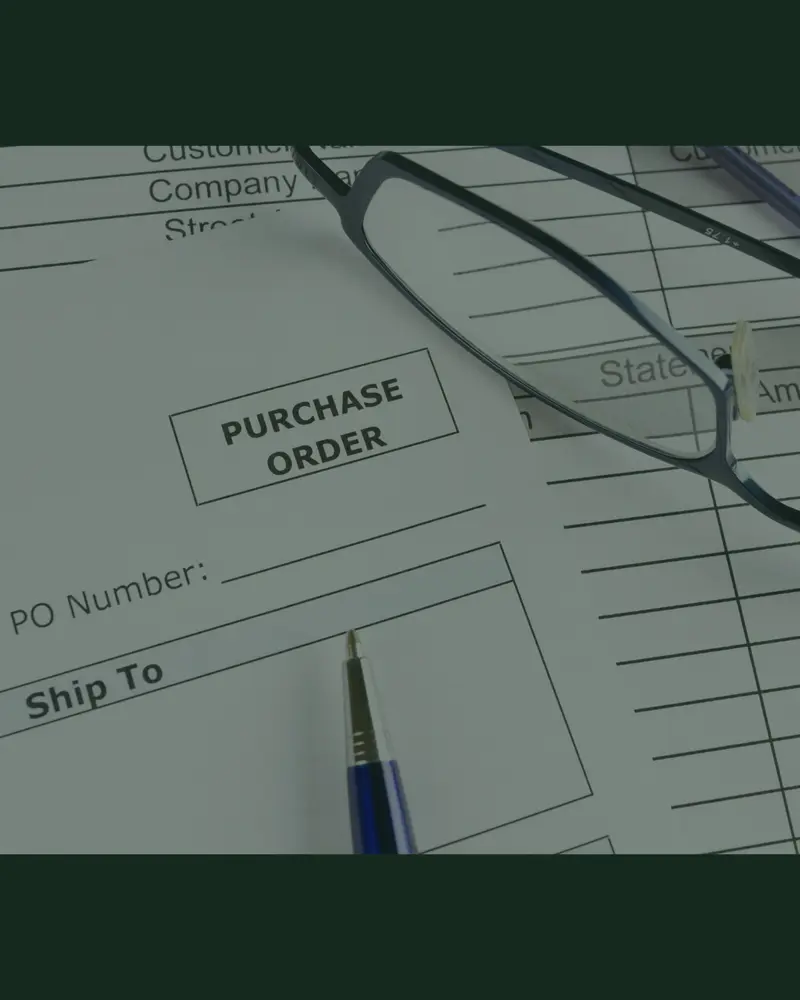
Most builders treat Purchase Orders like paperwork. The best builders treat them like profit protection.
A Purchase Order (PO) isn’t just a formality, it’s the backbone of cost control. Yet, too many contractors skip them altogether, relying on gut feel and vendor statements to know what’s been spent.
That’s not control. That’s chaos with better formatting.
Why Builders Skip POs
If you ask builders why they don’t use POs, the answers are almost always the same:
“It’s too much admin.”
“Our PM software already tracks spend.”
“We don’t need that level of control.”
But here’s the problem: without POs, every project runs blind on committed costs (the expenses you’ve promised but haven’t paid yet). Those untracked commitments are where profit quietly disappears.
What Happens Without POs
Without a clear record of committed costs, you lose three things that define good financial management:
- Visibility: You can’t see what’s been ordered versus what’s been invoiced.
- Accountability: Field teams approve spend after the fact, not before.
- Predictability: Budgets turn into moving targets instead of financial guardrails.
When that happens, “budget vs. actual” becomes a post-mortem exercise instead of a proactive tool.
The Real Purpose of a Purchase Order
A PO isn’t just about getting a signature. It’s about defining scope, price, and responsibility before money changes hands. That one act, putting a number on paper and getting it approved, turns a guess into a commitment.
Think of POs as the contract inside the contract:
- They lock in pricing before inflation hits.
- They set boundaries for what’s included (and what’s not).
- They create a timestamped record of who approved the spend and when.
In short: POs make sure your costs tell the same story as your contracts.
The Benefits of PO Discipline
Firms that implement structured PO systems consistently report:
- Cleaner job costs- every expense has a home before it hits the books.
- Fewer surprise invoices- vendors can’t bill for what wasn’t approved.
- Faster billing cycles- clear documentation speeds up draw approvals.
- Higher trust with clients and subs- transparency builds confidence on all sides.
POs don’t slow projects down. They keep them on track.
How to Build PO Discipline (Without the Headache)
Here’s what we’ve seen work best across high-performing builders and accounting firms:
1. Start with structure.
Create PO templates by cost code and make it easy for PMs to fill in the blanks.
2. Make approvals fast and mobile.
If your approval process requires a desktop login, it’ll never happen on time.
3. Link POs directly to budgets.
The moment a PO is issued, your budget should reflect the committed cost.
4. Automate matching.
Bills should automatically reconcile against their POs so finance isn’t hunting for paperwork.
5. Review weekly.
Every Friday, check open POs against budgets. Spot issues before they turn into cash flow crunches.
What “Good” Looks Like
When PO discipline becomes habit, you can answer these questions instantly:
- What’s been ordered but not billed?
- Which vendors are over budget?
- Which jobs have the highest committed cost exposure?
- How much cash is tied up in pending approvals?
If you can’t answer those today, that’s your sign.
Takeaway
POs aren’t about more admin. They’re about fewer surprises.
The builders who win the margin game are the ones who treat Purchase Orders not as paperwork… but as profit control.
For a deeper look at PO discipline, check out the recording from our webinar with Shawn Van Dyke.
Ready for crystal clear financials without the headache?
See how Adaptive's AI-powered platform can transform your construction accounting.
Book a DemoRelated Posts

Adaptive Selected for the 2026 AICPA/CPA.com Startup Accelerator
Adaptive joins the 2026 AICPA/CPA.com Startup Accelerator, advancing AI-powered construction accounting and real-time financial visibility for CPA firms and builders.

Construction Draw Software: Features, Benefits, and Best Options
Learn how construction draw software speeds up payments, automates draw packages, and improves cash flow. Compare top tools and key features for builders.
How Job Costing Tools Help Track Project Profitability
Learn what a job costing tool is, how it protects construction margins, and which features matter most for tracking budget vs. actual costs.