Blog
Insights on construction finance, job costing, and accounting technology.
Choosing the Best Construction Accounting Software that Integrates with Sage in 2026
Sage offers three different construction products, not one. This guide compares Sage 100 Contractor, Sage 300 CRE, and Sage Intacct Construction, weighs Sage against QuickBooks, and shows how to evaluate integrations that fill the gaps Sage wasn't built to handle.
Introducing Project Accounting Agents
Adaptive introduces Project Accounting Agents, a new category of AI that calls the field, codes invoices, drafts change orders, and chases compliance to give construction finance teams real-time visibility into every job.
The 5 Financial Workflows Every Construction Team Should Automate
Construction finance teams waste weeks on bill entry, approvals, and stale WIP reports. Here are the 5 workflows to automate first — and how to start without ripping out your ERP.

How AI Agents Are Redefining Construction Accounting
See how AI agents automate construction accounting—from job costing and AP to WIP, billing, and compliance—without replacing your ERP.
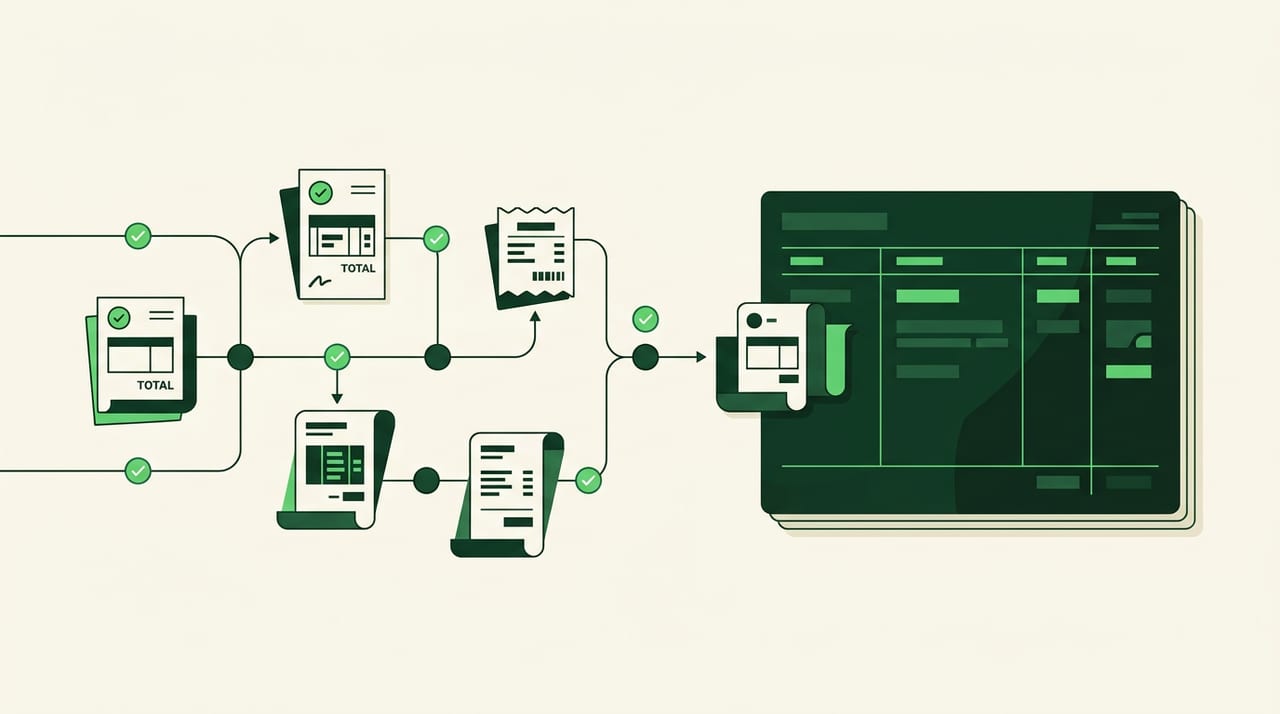
AP Automation for Construction: Benefits, ROI, and How to Get Started
Construction AP automation captures invoices, codes them to the right job and cost code, routes approvals, and pays subs—without manual data entry. Here's how it works, what it costs, and how to roll it out.
How AI Reads Construction Invoices, Flags Budget Overruns, and Runs Your Back Office Automatically
Learn how AI reads and codes construction invoices automatically, catches budget overruns mid-job, and how Adaptive's specialized AI agents handle job costing, compliance, and WIP reporting in real time.
Construction Payments Software: The Essential Guide for Contractors
Learn how construction payments software automates pay apps, lien waivers, compliance tracking, and subcontractor payments — and how to choose the right platform for your business.

Adaptive Selected for the 2026 AICPA/CPA.com Startup Accelerator
Adaptive joins the 2026 AICPA/CPA.com Startup Accelerator, advancing AI-powered construction accounting and real-time financial visibility for CPA firms and builders.
Construction Accounting Software: A 2026 Guide for Contractors
Construction accounting software helps contractors track job costs, automate AP, manage AIA billing, and protect margins. See the key features and how to choose the right platform in 2026.
Construction Draw Software: Features, Benefits, and Best Options
Learn how construction draw software speeds up payments, automates draw packages, and improves cash flow. Compare top tools and key features for builders.
How Job Costing Tools Help Track Project Profitability
Learn what a job costing tool is, how it protects construction margins, and which features matter most for tracking budget vs. actual costs.
Adaptive Wins Best of IBS™ 2026 for AI-Powered Construction Accounting Software
Adaptive wins Best of IBS 2026 for AI-powered construction accounting software that automates job costing, WIP, billing, and financial controls.
Adaptive: AI Bookkeeping Software That Learns Your Business
For construction companies, generic AI bookkeeping falls short. You don't just need expenses categorized by account—you need them tied to specific jobs, cost codes, and phases. This guide covers how AI bookkeeping works, what to look for in a platform, and why builders running complex projects require purpose-built tools.
Cost Codes 101: Everything You Need to Know in 2026
Cost codes are the standardized identifiers that let you track exactly where money goes on every job—by task, by trade, by phase. Without them, your job cost reports are just guesswork dressed up as data.
9 Best Construction Financial Software Platforms (2026 Comparison)
We compared 9 construction financial software platforms for 2026 on job costing, AP automation, WIP, and AIA billing. See which one fits your company size and how to choose.
Construction Bookkeeping Is Broken. Here's How Builders Are Fixing It
Most builders are drowning in data but starving for visibility. Learn how connecting your systems, automating your job costing and accounts payable, and shortening feedback loops can turn scattered numbers into real-time insights — and protect your margins before they disappear.
Behind the Build: Sitting Down with Fernhill’s Alex Molkentin on The Build Project Podcast
From jobsite roots to AI and systems thinking—this conversation on The Build Project Podcast is all about what’s driving the next decade of residential construction.
The Builder’s Data Problem: Why You Can’t Fix What You Can’t See
Most builders are drowning in data but starving for visibility. Learn how connecting systems, shortening feedback loops, and automating cost flow can turn scattered numbers into real-time insights — and protect your margins before they disappear.
What Real Job Costing Looks Like (And Why Most Builders Are Doing It Wrong)
How to stop job guessing and start controlling your margins with Adaptive’s real-time construction financial tools

The Forgotten Art of PO Discipline (and Why It Saves Your Margins)
Most builders skip Purchase Orders because they see them as admin work. But POs are the foundation of cost control and margin protection. Learn how disciplined PO workflows can improve visibility, eliminate surprise invoices, and keep projects on budget.
One Connected Workflow: Adaptive Now Integrates with BuildPass
Your jobsite and your books, finally speaking the same language.
The Myth of the Perfect System (And Why It’s Costing You Time and Money)
Many builders waste months chasing the “perfect system," the one tool that’ll solve everything. System = the mix of software and spreadsheets you use to track work. Process = the repeatable steps that move information from field to finance. Real success comes from building connected processes that work across imperfect tools. Learn how to stop waiting for perfect and start making progress.
Are You Running a Building Company or a Bank?
Most builders act like banks without realizing it: floating materials, labor, and subcontractor costs long before getting paid. Learn how to protect your cash flow, align billing with spend, and run your construction business like a financial operator.
The Real Reason Builders Lose Money
Most builders blame material costs for shrinking margins, but the real problem is broken processes. Learn how delays, missing approvals, and manual workflows silently kill profit, and what top builders do differently.
Adaptive Announces Procore Integration to Bring AI-Native Project Financials to Construction CFOs and Controllers
The power of AI-driven financial control now connected to your project data in Procore.
What Contractors Get Wrong About Cost Plus (And How to Make It Work)
Cost plus isn’t safer by default, it’s just different. Without tight tracking, approvals, and reporting, it can become a mess. But with the right system? It’s a powerful tool for profitable, transparent builds.
When to Rebuild Your Cost Code Structure (And How to Know It’s Time)
If your cost code structure causes more confusion than clarity, it’s time to rebuild. Keep it simple. Keep it actionable. And make sure it matches how you actually build.
Why Builders Need a Monthly Financial Health Check (And What Should Be In It)
A monthly financial health check helps you catch issues before they become emergencies. Review your numbers like you walk your sites: frequently, thoroughly, and with purpose.
No Blind Spots: How Our Shadow Pipeline Hardens AI Agents in Adaptive
A production‑shadow lab where we safely A/B test prompts, retrieval strategies, and LLMs—confirming impact before rollout.
How to Train PMs and Field Teams on Job Costing (Without Overwhelming Them)
If your PMs don’t know their numbers, you don’t know your margins. Teach them why it matters, give them the right tools, and keep the process stupid-simple. It’ll pay off in every project.
The Case for Real-Time Budgets in Construction Projects
Construction changes daily. Your budget should too. Real-time budgets don’t just keep you informed, they keep you profitable.
Why "Business as Usual" in Construction Is Becoming Unsustainable
Over the last 10 years, despite the rapid growth of construction specific software such as Procore and Buildertrend, not adopting tech meant missing opportunities. Going forward, resistance to tech puts your competitive position at genuine risk.
The Builder’s Guide to Categorizing Overhead vs. Job Costs
If your job costs and overhead are blended together, your financials are lying to you. Get clear on what belongs where, and your margins will thank you.
AI in Construction Accounting: 3 Real Use Cases Builders Should Know
AI in construction accounting isn’t hype, it’s how smart builders protect profit without adding more headcount. Real-time job costing, predictive alerts, and smarter workflows are already here. The only question is: are you using them?
How to Build a Bulletproof Draw Process (Without Chasing Paper)
If your draw process depends on memory, inboxes, or field guesswork it’s costing you. Automate it, standardize it, and review weekly. Your bottom line will thank you.
7 Reports Every Builder Should Review Weekly (That Most Don’t)
Weekly reporting isn’t red tape, it’s how pros protect profit. One hour a week can save tens of thousands a year.
What Is a Good Margin in Residential Construction? (And How to Actually Protect It)
A good margin starts with a good system. Want to keep 25%? Start tracking like you mean it.
Construction Bookkeeping vs. Accounting: What’s the Difference and Why It Matters
Why Builders Struggle to Scale Without Financial Visibility
Scaling without financial visibility is like building without blueprints. You might get there… but it won’t be pretty.
The Real Cost of Paper Receipts and Manual Bill Approvals
Discover how paper receipts and manual bill approvals quietly erode construction margins—and how going digital can save time, improve accuracy, and protect your profit.
The 5 Most Common Job Costing Mistakes (And How to Fix Them)
Builders often think they have a handle on job costing — until projects go over budget. Let’s break down the most frequent errors (like inconsistent cost code use or failing to tag receipts) and how to course-correct using smarter systems and workflows.
Fixed Price vs. Cost Plus: How Accounting Strategy Changes
Discover the key accounting differences between fixed price and cost-plus construction contracts. Learn what builders must track under each model to stay profitable and how better processes can protect your margin.
Scaling Your Construction Business Without Scaling Your Overhead
Growing your construction business doesn’t have to mean growing your overhead. Learn how smart builders are using automation and real-time job costing to scale with control, clarity, and confidence.
Real-Time Job Costing: Why It Matters More Than Ever in 2025
In today’s volatile market, real-time job costing is essential. Learn how tracking costs as they happen helps builders forecast accurately, protect margins, and stay in control—despite rising prices and economic pressure.
Why Your WIP Report Is Lying to You (and How to Fix It)
Inaccurate WIP reports can lead to poor decisions and profit loss. Learn how missing receipts, uncoded costs, and manual processes distort job data—and how real-time workflows can fix it.
Cost Coding 101: How to Build a Structure That Actually Works
Learn how to build a cost code structure that supports accurate job costing, clean financials, and scalable operations. Avoid common pitfalls and start using cost codes that actually work for your construction business.
The Hidden Cost Leaks That Are Killing Your Margins
Discover the hidden cost leaks draining your construction margins—from missed receipts to miscategorized expenses. Learn how to fix them with simple process improvements and automation tools that keep your books clean and your profits protected.
Introducing Adaptive Cards: Field Spending, Finally Under Control
We’re thrilled to announce the launch of Adaptive Cards—smart, field-ready charge cards designed specifically for construction companies managing jobsite spending at scale.
Introducing Adaptive for Accounting Firms: Scale Construction Services Without Adding Headcount
Turn complex bookkeeping into your gateway to high-margin advisory work in the $850B SMB construction market
Adaptive + Ressio: A Partnership that Connects Financials Between the Field and the Back Office
Construction technology is evolving, and builders shouldn’t have to choose between great project management and great financial management. With Adaptive and Ressio, they get both—seamlessly connected.
500 Construction Companies Trust Adaptive to Streamline Their Finances
Thanks to our incredible customers and accounting firm partners for joining us on this journey.
Adaptive Named a 2025 Best of IBS™ Finalist for Best Business Solution Software
Adaptive’s AI-native financial platform continues to redefine construction finance—earning recognition at the industry’s biggest event.
Adaptive Named to the 2024 CB Insights’ List of the 100 Most Innovative Fintech Startups
Adaptive recognized for achievements in Financial Management and Accounting.
Adaptive Raises $19M in Series A Funding!
Adaptive has raised $19M in Series A funding, bringing our total capital raised to $26M.
Mastering Cash Flow Management for Construction
Explore strategies to alleviate cash flow concerns and finally achieve financial clarity
AP Automation for Construction
Learn how the country's best construction companies are reducing overhead and increasing profits with accounts payable automation tools.
Mastering Your Project Financials: Setting Up a Solid Construction Budget
The definitive guide to setting up a construction budget and tracking your job costs
The Five Essential Financial Reports: Can You Get Them in QuickBooks Online?
The five key financial reports every construction company should track and how to generate them.
The Contractor's Guide to Construction Job Costing
A practical guide to mastering construction job costing for your next project
Using QuickBooks for Construction
QuickBooks has a suite of construction-specific tools that can help you understand your business – but it also has limitations. This article explores both so that you can decide if QuickBooks is right for your business.
A Guide to Construction Budgeting Software
Construction budgeting software can help you understand your business, make better decisions, and save time and money. We've identified 5 factors to consider when you choose a budgeting software provider.
Keep Perfect Records – Every Cost, Every Job
Having perfect accounting records is a key component of executing a cost-plus contract. We've identified 3 tips to help you master the process.
Allocating Costs in Your Cost-Plus Construction Contract
Determining which costs to mark-up in your cost-plus contract can be challenging. Here are 3 cost categories that are easy to forget.
How to Calculate the Mark-up in Your Cost-Plus Construction Contract
In a cost-plus pricing structure, your profit is mostly determined by your mark-up. Use this three-step process to maximize your profits.
Cost-Plus Pricing for Builders: The Three Pillars
What is cost-plus pricing? Many builders are considering this model. Here's how to execute a construction contract using the cost-plus pricing model.
Announcing Adaptive and $6.5 million in funding
We started Adaptive to save construction teams time and money. We want to make it really easy for construction companies to stay on top of their finances and we’re thrilled to announce that we’ve raised $6.5 million to do just that.